
Eligibility is the part of Centrelink that makes people hesitate.
Not because they don’t want help, but because they’re unsure whether they’re allowed to ask for it. Many people quietly assume they won’t qualify. Others assume they will, and are surprised when the system says no.
Both reactions come from the same place: eligibility rules are rarely explained in plain, human terms.
This explanation isn’t a checklist and it isn’t legal advice. It’s a way of understanding how eligibility for Centrelink payments actually works in Australia, how decisions are usually made, and why eligibility is less about labels and more about circumstances.
What “Eligible” Really Means
In the Centrelink system, eligibility does not mean you deserve help, that you’re struggling enough, or that you’re a good or bad person.
Centrelink doesn’t assess worth. It assesses conditions.
Eligibility simply means that, based on the information you provide, you meet the rules for a specific payment at this point in time.
That timing matters. Eligibility isn’t permanent. It can start, change, pause, or end as your situation changes.
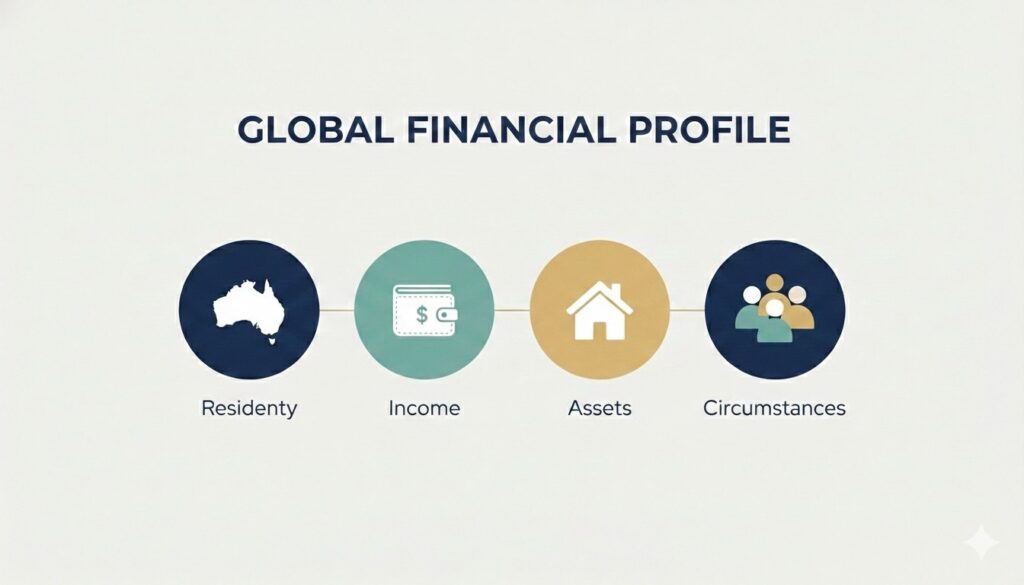
The Four Pillars That Decide Eligibility
Almost every Centrelink payment is assessed using the same four foundations. Understanding these gives more clarity than memorising payment names.
Residency status. Income. Assets. Personal circumstances.
Different payments weigh these differently, but none ignore them entirely.
Residency
Residency is the first gate. If you don’t pass it, nothing else matters.
In general, Centrelink payments are available to Australian citizens, permanent residents, and some visa holders with specific conditions.
Being allowed to live in Australia is not the same as being eligible for Centrelink. Some visas have waiting periods. Others exclude access entirely.
Even citizens can be temporarily ineligible if they’ve recently arrived or returned to Australia, depending on the payment type.
This is where many people get confused. Immigration status and Centrelink eligibility are separate systems.
Income
Income eligibility is rarely all-or-nothing.
Centrelink doesn’t just ask whether you earn money. It asks how much you earn, how often, where it comes from, and whether it’s ongoing.
Income can include wages, casual or part-time work, self-employment income, some overseas income, and certain government payments.
Earning income doesn’t automatically disqualify you. Many payments are designed to taper as income increases.
There are limits. Once income crosses certain thresholds, eligibility reduces or ends.
Assets
Assets are often misunderstood as punishment for saving. That’s not their purpose.
Centrelink uses assets to assess fallback capacity. If income stopped, do you have resources you could reasonably use?
Assets can include savings, investments, vehicles, and property other than your main home in many cases.
Assets don’t always remove eligibility. They often reduce payment amounts instead.
This isn’t moral judgment. It’s prioritisation.
Personal Circumstances
This is where eligibility becomes specific.
Centrelink payments exist to support particular life situations, not low income in isolation.
Whether you’re unemployed, studying, parenting, caring for someone, or managing a long-term health condition all affects eligibility.
This is why two people with similar incomes can receive very different outcomes.
Age and Eligibility
Age affects eligibility more than many people expect.
Different payments exist for young people, working-age adults, and older Australians approaching retirement.
Age influences payment type, mutual obligations, income thresholds, and asset rules.
Students
Being a student doesn’t automatically make someone eligible.
Centrelink looks at study load, course type, institution, age, parental income for younger students, and personal income and assets.
Support is available, but the rules are narrow and closely enforced.
Parents and Families
Family-related payments assess the household, not just the individual.
Income, number of children, their ages, and care arrangements all matter.
Changes in relationships or living arrangements directly affect eligibility and must be reported.
Disability and Caring Roles
Disability and carer payments involve stricter evidence requirements.
Eligibility depends on medical evidence, functional impact, duration of condition, and capacity to work or care.
These payments are harder to qualify for but tend to be more stable once approved.
What Does Not Automatically Make You Eligible
Losing a job, feeling financial stress, being overwhelmed, or knowing someone who receives Centrelink does not guarantee eligibility.
Eligibility is rule-based, not comparison-based.
Waiting Periods
Some people meet eligibility rules but don’t receive payments immediately.
Waiting periods can apply due to recent arrival, liquid assets, or temporary income.
In these cases, eligibility exists, but payment is delayed.
Eligibility Is Reviewed
Eligibility is ongoing, not locked in.
Changes in income, assets, relationships, study, or work can all trigger reassessment.
Losing eligibility later doesn’t mean receiving support earlier was wrong.
Why Eligibility Feels Confusing
Rules aren’t explained in everyday language. People compare themselves to others. Life changes faster than systems update.
Eligibility isn’t intuitive. It’s administrative.
The Real Takeaway
Eligibility isn’t about proving hardship or convincing someone you deserve help.
It’s about whether your current circumstances, measured against specific rules, align with the purpose of a particular payment.
Understanding residency, income, assets, and circumstances — and knowing that eligibility can change — removes much of the fear around even checking.
And for most people, that understanding alone makes the system feel far more approachable.